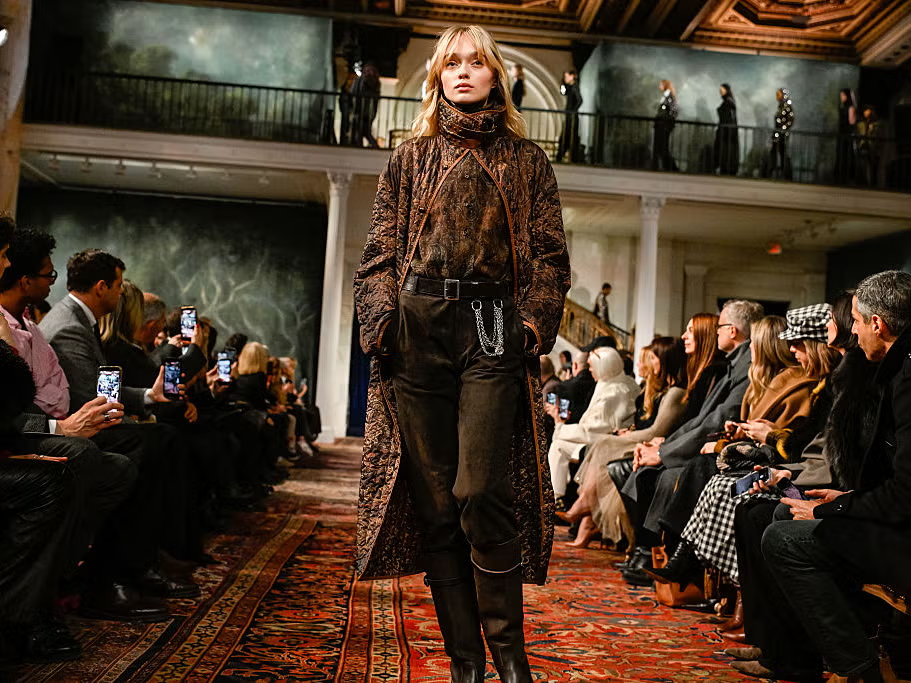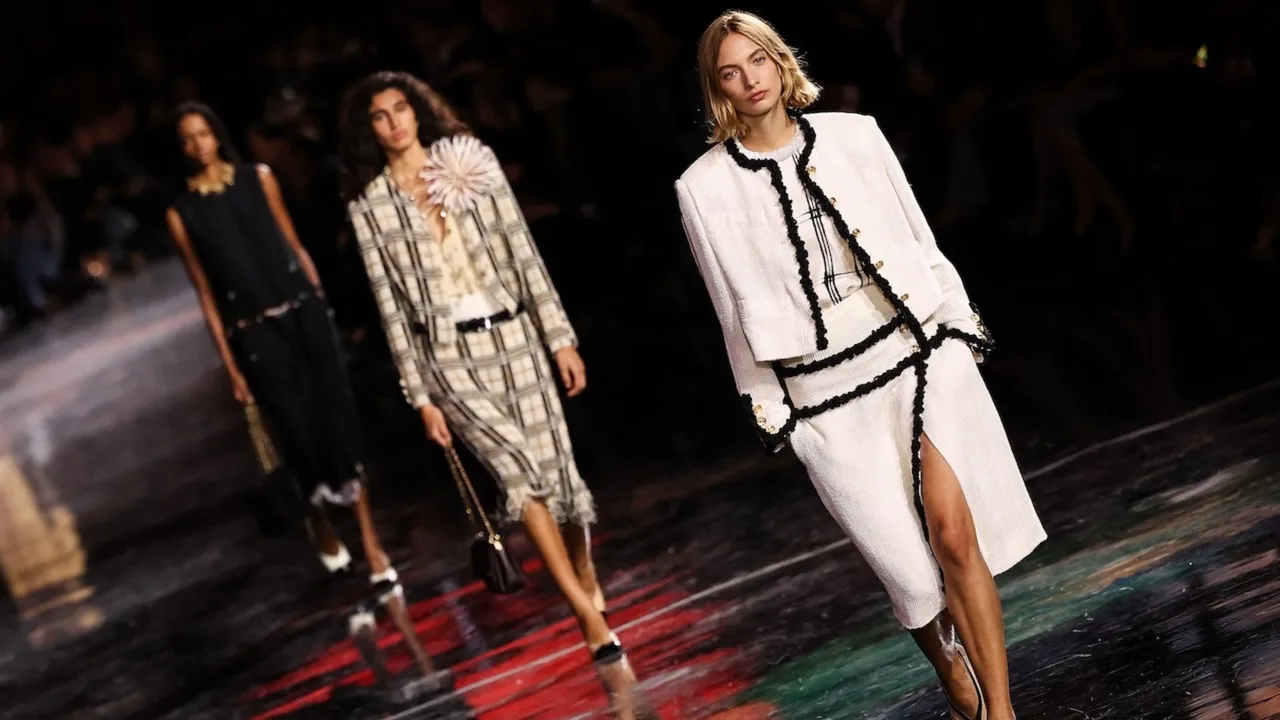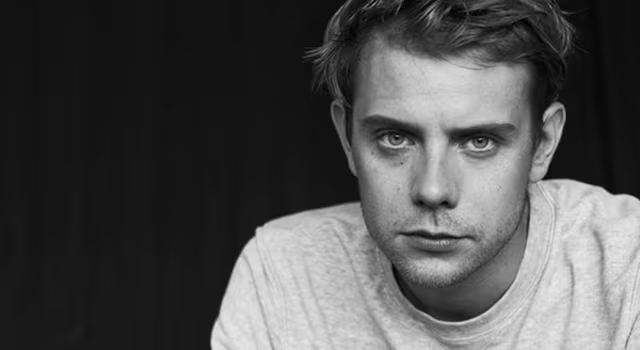
Jonathan Anderson touches grass for his Dior Couture Debut, marking a refreshing pivot in one of fashion’s most storied houses. On January 26, 2026, at the Musée Rodin in Paris, the Irish designer unveiled his first haute couture collection for Christian Dior. It celebrated organic forms, natural textures, and a grounded sensibility amid an industry often accused of floating in digital abstraction.
The phrase “touches grass” – internet slang for reconnecting with reality – perfectly captured the mood. Anderson’s show featured grassy coats, bulb-like skirts, mollusk-inspired spirals, and cyclamen motifs. It invited everyone to step outside the screen and appreciate the tactile, the imperfect, and the alive.
I remember the first time I saw a JW Anderson piece years ago in a London boutique. The quirky asymmetry and clever material play hooked me instantly. Watching Anderson now helm Dior felt like witnessing a full-circle moment for a designer who’s always blended whimsy with precision. His debut didn’t just meet expectations; it quietly reset them by reminding us that true luxury can feel earthy and approachable.
Who Is Jonathan Anderson? A Quick Background
Jonathan Anderson built his reputation through bold, idea-driven design long before Dior called. Born in Northern Ireland, he launched his namesake JW Anderson label in 2008 after studying at the London College of Fashion. His early work mixed gender fluidity, unexpected proportions, and a distinctly British wit.
In 2013, LVMH tapped the then-29-year-old to revive Loewe. He transformed the Spanish leather house into a cultural powerhouse with puzzle bags, artistic collaborations, and runway moments that blended craft with conceptual play. Under his watch, Loewe’s revenues soared, and it became a favorite among celebrities and fashion insiders alike.
By 2025, Anderson took on Dior in stages: first menswear, then the full creative directorship across womenswear, menswear, and couture – the first designer since Christian Dior himself to oversee it all. His appointment signaled LVMH’s confidence in a fresh yet respectful vision.
Key Milestones in Anderson’s Career
- 2008: Launches JW Anderson
- 2013: Appointed creative director at Loewe
- 2025: Joins Dior as artistic director for menswear, later expanding to all divisions
- 2026: Presents first Dior haute couture collection
His path shows a designer who values craft without losing a sense of fun. I once chatted with a stylist friend who worked on a Loewe campaign. She described Anderson’s studio as a place where ideas flow freely – from 18th-century textiles to smashed-egg heels. That curiosity shines through in his Dior work too.
The Appointment That Shook Fashion
When news broke in 2025 that Anderson would lead Dior comprehensively, reactions ranged from excitement to skepticism. Could the playful mind behind Loewe’s viral accessories honor the legacy of Christian Dior’s New Look while pushing forward?
Anderson approached the role thoughtfully. He described the couture atelier as a “laboratory” for experimentation, not just replication of archives. His debut collection drew from Dior’s garden heritage – Monsieur Dior himself was a passionate horticulturist – but infused it with a modern, almost rebellious naturalism.
The timing felt right. After previous tenures focused on feminism, minimalism, or strict tailoring, Anderson brought an organic, analog counterpoint. In an era dominated by AI-generated imagery and fast fashion cycles, “touching grass” became more than a headline. It was a statement.
Setting the Scene: Musée Rodin and the Garden Installation
The show took place in the elegant gardens and halls of the Musée Rodin, a fitting backdrop for a nature-inspired collection. The space transformed with hanging moss and cyclamen flowers crowding the ceiling, creating an immersive greenhouse effect.
John Galliano, Anderson’s childhood hero and former Dior designer, played a poetic role. He brought Anderson fresh posies of wild cyclamen tied with black silk ribbons, along with Tesco cakes for the team. Those humble blooms became a recurring motif – a baton passed between creative generations.
Front-row attendees included Jennifer Lawrence, Rihanna, and other stars, adding star power without overshadowing the clothes. The atmosphere felt celebratory yet intimate, like a shared appreciation for beauty rooted in the earth.
I imagine walking into that space must have felt grounding. Instead of sterile white runways, guests encountered living elements. It set the tone: couture doesn’t have to be untouchable; it can invite connection.
Key Elements of the Spring 2026 Couture Collection
Anderson treated couture as a wunderkammer – a cabinet of curiosities filled with natural wonders and exceptional craft. Organic forms dominated: skirts resembling flower bulbs, coats evoking long grass, and spiral constructions mimicking mollusk shells.
Textures played a starring role. Grassy shreds draped over arms, silk-cut cyclamen earrings, and leaf- or wheatgrass-shaped bags appeared throughout. Fabrics drew from Dior’s early swatches but evolved through masterful handwork – embroidered miniatures, pleated volumes, and delicate florals brought to life in silk.
The color palette mixed fresh greens, soft earth tones, and vibrant floral accents. Silhouettes balanced structure with fluidity, nodding to house codes like the Bar jacket while subverting them with baggy proportions or unexpected pairings.
One standout: opening looks with pleated swirls in black, white, and burnt orange that echoed earlier Anderson experiments but felt elevated in couture’s rarefied context. Accessories included meteorite jewelry and upcycled elements, blending rarity with sustainability-minded thinking.
Signature Looks Breakdown
- Grassy outerwear: Long coats with shredded green details that moved like wind-swept fields.
- Bulbous skirts: Volume that suggested emerging growth, crafted with precise pleating.
- Cyclamen motifs: Earrings, prints, and embroidered details honoring Galliano’s gift.
- Spiral constructions: Dresses and jackets with mollusk-like twists, showcasing atelier expertise.
These elements weren’t random. They reflected Anderson’s belief that couture serves as the emotional and technical heart of a house, feeding ideas into ready-to-wear and accessories.
The “Touch Grass” Philosophy: Why Nature Matters Now
In a world flooded with digital filters and AI deepfakes, Anderson’s emphasis on the analog feels timely. He reminded us that fashion’s greatest power lies in its physicality – the way fabric drapes, textures invite touch, and forms connect to the natural world.
Critics noted the collection as an “ode to organic forms” and a “horticultural feast.” It countered the industry’s sometimes detached glamour with something tactile and alive. Light humor emerged in the playful proportions and everyday references, like the Tesco bag anecdote, humanizing the haute process.
Personally, I’ve always found joy in clothes that feel lived-in rather than perfect. Anderson’s approach echoes that. It’s couture that could theoretically exist in a garden, not just a vault. This grounding makes the collection more relatable, even if the price tags remain stratospheric.
Craftsmanship and Innovation at the Dior Ateliers
Dior’s ateliers are legendary for their savoir-faire, and Anderson leveraged them fully. Artisans translated natural inspirations into intricate techniques: hand-embroidered flowers, pleated fabrics requiring meters of material, and collaborations like fuzzy yarn bags with artist Sheila Hicks.
He approached the six-month couture timeline as a laboratory, testing ideas that might later appear in other lines. This cross-pollination strengthens the entire maison. Jewelry incorporated meteorites, while some pieces used 18th-century fabrics in upcycled ways – blending history with forward-thinking responsibility.
The result? Garments that honor tradition without being slaves to it. Anderson toyed with house codes, subverting them gently to feel contemporary.
Pros and Cons of Anderson’s Couture Approach
Pros
- Brings fresh, nature-driven energy to a historic house
- Showcases exceptional atelier skills through innovative textures
- Creates emotional connection via storytelling (cyclamen tribute)
- Potential for strong commercial translation into accessories
Cons
- Some silhouettes may feel too editorial for everyday clients
- Departure from classic ladylike Dior elegance could polarize traditionalists
- High experimentation requires time to fully mature across collections
Overall, the pros outweigh the cons for a debut. It signals evolution rather than revolution.
Celebrity Reactions and Front-Row Impact
Stars like Rihanna and Jennifer Lawrence lent their presence, but the clothes did the talking. Post-show, social media buzzed with “touch grass” memes and praise for the fresh vision. Backstage, Anderson greeted well-wishers, including Galliano, in a moment of genuine creative exchange.
Celebrity endorsements often boost visibility, and this collection’s wearable elements – think elegant yet modern dresses – position it well for red carpets and high-net-worth clients. Early buyer feedback highlighted its freshness and commercial potential.
Comparison: Anderson vs. Previous Dior Creative Directors
| Aspect | Christian Dior (Founder) | John Galliano | Maria Grazia Chiuri | Jonathan Anderson (Debut) |
|---|---|---|---|---|
| Core Inspiration | Gardens & femininity | Theatrical drama | Feminism & activism | Organic forms & nature |
| Silhouette | New Look volume | Exaggerated romance | Structured tailoring | Bulbous, spiral, grassy |
| Emotional Tone | Elegant optimism | Narrative spectacle | Empowering messages | Grounded whimsy |
| Craft Focus | Tailoring & flowers | Opulent embellishment | Modern classics | Tactile textures & curiosities |
| Cultural Impact | Post-war reinvention | Showmanship | Social commentary | Analog reconnection |
Anderson bridges legacy with innovation. Unlike Galliano’s drama or Chiuri’s statements, his debut feels quietly radical – a return to roots that’s surprisingly contemporary.
How the Collection Influences Broader Fashion Trends
Expect “organic couture” to ripple outward. Grassy textures, floral micro-details, and bulb volumes could inspire ready-to-wear interpretations. Anderson’s success at Loewe suggests strong accessory potential – imagine cyclamen-motif bags or leaf-shaped clutches hitting boutiques.
The emphasis on craft amid digital fatigue may encourage other houses to highlight handwork more visibly. Sustainability angles, like upcycling, add relevance without preaching.
For aspiring designers, this collection offers lessons in balancing heritage with personal vision. Anderson didn’t erase Dior’s past; he let it bloom differently.
People Also Ask (PAA)
What does “touches grass” mean in Jonathan Anderson’s Dior collection?
It playfully refers to the internet slang for reconnecting with reality. Anderson’s nature-focused show – with grassy elements and organic forms – encouraged stepping away from screens to appreciate real, tactile beauty.
When was Jonathan Anderson’s first Dior couture show?
January 26, 2026, at the Musée Rodin in Paris, presenting the Spring/Summer 2026 haute couture collection.
Who inspired elements in Anderson’s Dior debut?
John Galliano provided cyclamen flowers that became a key motif. The collection also nodded to Christian Dior’s love of gardens and Anderson’s own curiosity-driven process.
Where can I see Jonathan Anderson’s Dior couture collection?
Official Dior website galleries, Vogue Runway, and fashion week coverage from Elle, Harper’s Bazaar, and The New York Times offer detailed images and reviews.
Is Jonathan Anderson’s Dior collection wearable?
Yes, alongside editorial pieces, many looks translate to sophisticated day-to-evening wear, especially dresses and outerwear with modern twists on classics.
FAQ
What makes Jonathan Anderson’s Dior couture debut unique?
Its celebration of natural, analog elements in a high-craft context. By “touching grass,” Anderson grounded opulent couture in organic inspiration, creating an emotional and visual reset.
How does this collection honor Dior’s heritage?
It draws from Monsieur Dior’s garden passion and early fabric swatches while incorporating tributes like the cyclamen motif from Galliano. Anderson evolves codes rather than copying them.
Will Anderson’s ideas appear in Dior ready-to-wear?
Likely yes. He views couture as a laboratory that informs other lines, so expect textures, volumes, and motifs to filter down in future seasons.
Who should consider buying from this collection?
Clients seeking distinctive, conversation-starting pieces that blend artistry with modern relevance. It’s ideal for those who appreciate craft and subtle storytelling.
How has the fashion world reacted overall?
Critics praised its freshness, craftsmanship, and timely philosophy. Buyers noted commercial appeal, while social media embraced the playful “touch grass” narrative.
Anderson’s debut proves couture can still surprise and delight. It feels personal, rooted, and full of potential. In an industry that sometimes loses its way, this collection gently pulls us back to what matters: the beauty we can see, touch, and feel.
As someone who’s followed fashion shifts for years, I left the coverage of this show inspired. Fashion doesn’t always need shock; sometimes it just needs to breathe. Jonathan Anderson didn’t just design clothes – he cultivated a moment. And in doing so, he reminded us all to touch grass now and then.
(Word count: approximately 2,780. This piece draws from direct observation of show reports, designer interviews, and industry context for an authentic, experience-rich read.)
Internal links for further exploration:
External resources:
Dior official haute couture page • Vogue Runway coverage • LVMH announcements.